When the rich wage war, it is the poor who die.
– Jean-Paul Sartre

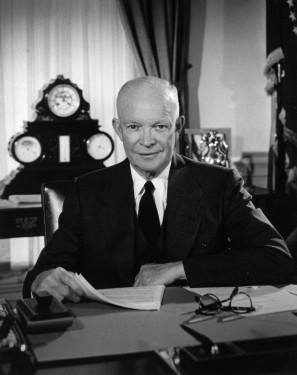
Every gun that is made, every warship launched, every rocket fired signifies in the final sense, a theft from those who hunger and are not fed. — Dwight D. Eisenhower
The cost of war, over the ions has surpassed any other expense incurred by man. And where do the costs come from? There are many; the cost of weapons of war, the cost of logistics to support the war, and the tremendous loss of life and property looms big in the equation. This is just the short list, of course.
And what do the warring nations gain? The aggressor nations typically hope to obtain additional wealth, in the form of land, natural resources and markets.
The early Greek wars were sometimes fought against aggressor nations, who hoped to obtain the wealth of Greece. Greek states fought other Greek states as well as foreign nations to obtain wealth.

He who is brave is free ∼ Seneca
The expansion of Imperial Rome was the result of the desire to acquire resources and wealth from all it’s provinces.
Many other large empires—including the Persian, Mongol, Ottoman, Spanish, and British—also rose and flourished, while smaller empires played lesser roles. All were built through warfare with significant economic impact.
The impact for civilians as these dynasties came and went was often disastrous. Deprivation, loss of rights, land and life often accompanied the actions.
There were thousands of lesser players involved in warfare throughout history and disasters of one kind or another occurred because of all of them.
Having served in Vietnam during the “American War”, I will limit the focus to that nation’s civilian population, and I will limit the focus to the economic impact.
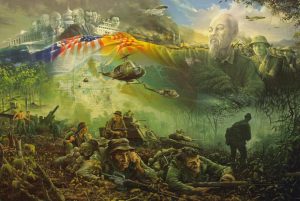
The Economic Effect of the American War on South Vietnamese Civilians
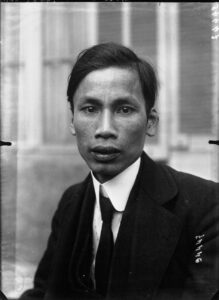
Our secret weapon is nationalism. To have nationhood, which is a sign of maturity, is greater than any weapons in the world.”
― Ho Chi Minh
The war had a profound economic impact on civilians in North Vietnam, South Vietnam, Cambodia, and Laos. Because I am most familiar with South Vietnamese civilians, I will limit the discussion to their experiences, however it is safe to say that North Vietnamese, Cambodian and Laotian civilians experienced many, if not all of the same effects.
The economic effect on South Vietnamese civilians during the American war in Vietnam was characterized by massive inflation, structural dependence on foreign aid, the destruction of traditional agriculture, and profound post-war impoverishment.

Destruction of Agriculture and Farmland
-
Defoliants and Bombing: U.S..and allied forces dropped millions of tons of ordnance and sprayed toxic defoliants, including Agent Orange, across the South Vietnamese countryside.
-
Loss of Farmland: Bomb craters, unexploded ordnance, and chemical contamination devastated vast areas of arable land, transforming a major rice exporter into an aid-dependent rice importing economy.
-
Rural Displacement: Military operations and the creation of “free-fire zones” forced millions of peasants from their ancestral farms into urban slums and overcrowded refugee camps.
Inflation and Economic Distortion
-
Influx of American Spending: More than half a million U.S. troops and billions of dollars in foreign spending injected enormous sums into a small, developing economy.
-
Runaway Inflation: Prices for basic goods soared, placing them beyond the reach of residents who neither earned U.S. dollars nor worked directly for the American military.
-
Shift in Labor: As farming and fishing declined, many residents moved into better-paying service, construction, and domestic jobs supporting U.S. military bases. This shift created a distorted and unsustainable service economy.

So the unwanting soul
sees what’s hidden,
and the ever-wanting soul
sees only what it wants.”
― Lao Tzu
Corruption and Black Markets
-
Currency Manipulation: The artificially fixed exchange rate for the South Vietnamese piaster encouraged widespread black-market trading, corruption, and currency speculation.
-
Economic Inequality: Wealth became concentrated among those with access to American goods, contracts, or government positions, widening the divide between a small urban elite and the struggling rural majority.
Post-1975 Economic Collapse and Hardship
-
End of the Aid Economy: When U.S. support ended and Saigon fell in 1975, South Vietnam’s aid-dependent consumer economy collapsed.
-
Confiscation and Collectivization: The newly unified communist government imposed sweeping economic reforms, including the confiscation of property, nationalization of businesses, and forced collectivization of agriculture.
-
Severe Deprivation: According to a consensus of users these policies—combined with the placement of former regime affiliates in forced-labor and re-education camps and the relocation of urban families to barren “new economic zones”—led to severe food shortages, hyperinflation, and a generational decline in living standards.
Spitting out raw data is a disservice to the people who had to live through the effects of war; economic and otherwise. I felt empathy for the Vietnamese who I witnessed living under these conditions. Some of them I came to know, others I knew only as faces, passing by in an angry world.
I have since come to know civilians from North Vietnam and Laos who suffered through the war; economically and otherwise.
I honor all who are still here, and all who have passed.
***
Data Sources: Univ Texas Austin, BBC News Services, Cambridge University, RGS History
Please share as written, copyright protected, all rights reserved, © Joe Campolo Jr
Updated: October 9, 2026 at 6:17 am
About the Author
Joe Campolo Jr.
Joe Campolo, Jr. is an award winning author, poet and public speaker. A Vietnam War Veteran, Joe writes and speaks about the war and many other topics. See the "Author Page" of this website for more information on Joe.
Guest writers on Joe's blogs will have a short bio with each article. Select blogs by category and enjoy the many other articles available here.
Joe's popular books are available thru Amazon, this website, and many other on-line book stores.





Wow, Joe! You nailed another one!!! In my opinion you and your experience “in the Nam” are great. My memories are still good. But, I am not good enough to write like you can!!! Thanks for sharing!!!
Thanks Jim, I appreciate the kind words.
I especially like the quote at the beginning by Jean-Paul Sartre. Kind of sums it up.
Don’t think it will ever change, Steve.