The real heroes are those ones who are forgotten, forsaken and remain the nameless ones, in the history of time.
―
One Day in 1970
Morning

Binh meditated at the modest temple in her small dwelling in the village of Phu Cat. Phu Cat was in Binh Dinh Province, in the Central Highlands of South Vietnam. Binh shared the dwelling with her daughter Lan, her sister Mai, and Mai’s two children.
Phu Cat was also home to the U.S. Air Force 12th Tactical Fighter Wing. The Phu Cat Airbase had been completed in 1967 and was used for close combat support and interdiction in the war against the Communist North Vietnamese and their allies in the south, the Vietcong.
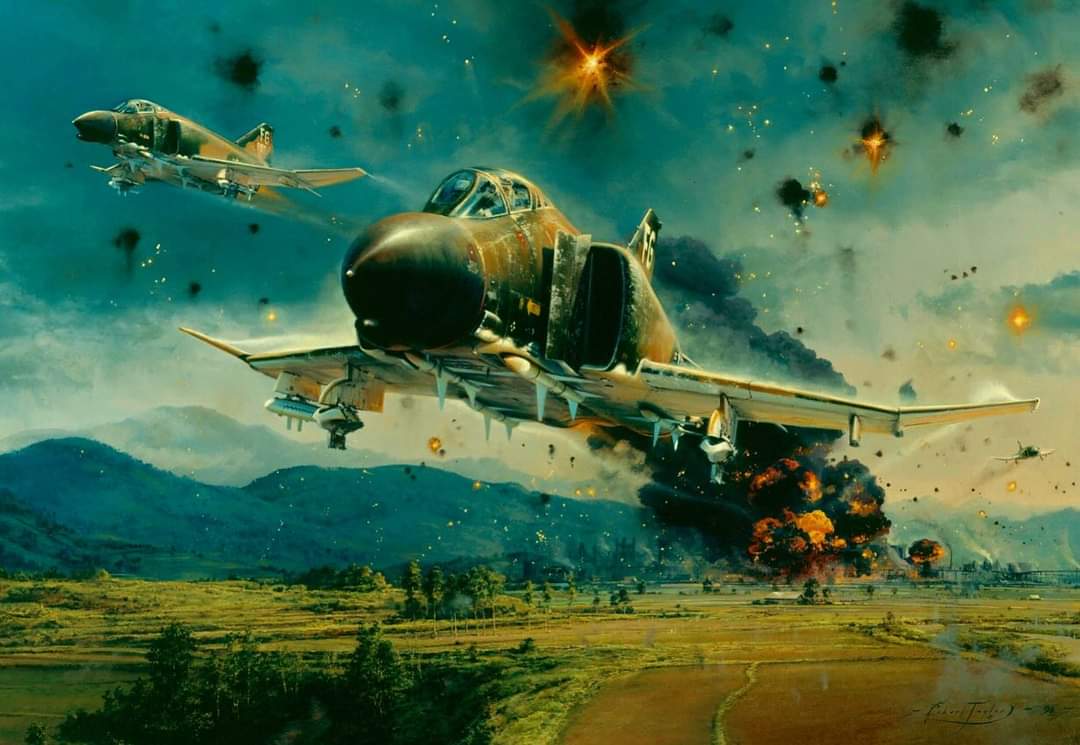
The F-4 Phantom was the workhorse of the 12th Tactical Fighter Wing
Binh worked on the large Airbase as a “hooch girl”, cleaning servicemen’s dwellings. At one time, she earned extra money washing their laundry in the nearby Phu Cat River. When the base installed a large capacity laundry machine, Binh’s earnings were reduced, as the only laundry task she had was toting the laundry back and forth in the GI’s laundry bag. An industrious person, Binh made up for the loss of income by sewing torn uniforms and doing other small chores for the GIs in the hooches she was assigned to.
Binh’s husband Hoa, a militia man, had been killed in a skirmish several years earlier, and although she was supposed to receive a small pension from the Vietnamese government, the payments fell off just a few months after they started, and no response as to why, was ever provided. Mai’s husband had disappeared about the same time, and local officials claimed he was a Vietcong who had left the area or been killed, and as a result of the accusation Mai was not given the opportunity to work on the American base. Binh’s small earnings from the base and Mai’s foraging efforts supported the family.
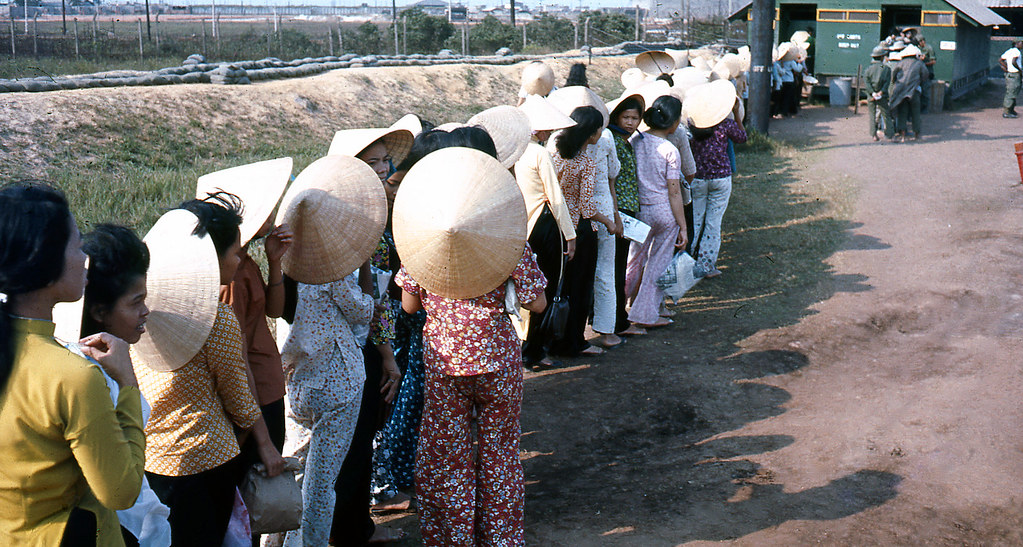
At 7am, Binh walked the short distance to the base entrance and got in line for the morning search, before entering the base. The workers chatted amongst themselves while the line slowly moved along. It seems there was another skirmish just outside the village during the night, and several RVN (Republic of Vietnam) soldiers were killed, along with an unknown number of Vietcong. The identity of those killed would take a few days to be sorted out and short funeral ceremonies would be held by family members.
At the front of the line, several U.S. Air Force health workers inoculated each Vietnamese before entering the base. A new outbreak of plague had recently sprung up in the area, and booster shots were being given to all those in line. A month earlier, cholera booster shots were given due to a reoccurring outbreak of that illness.
Work
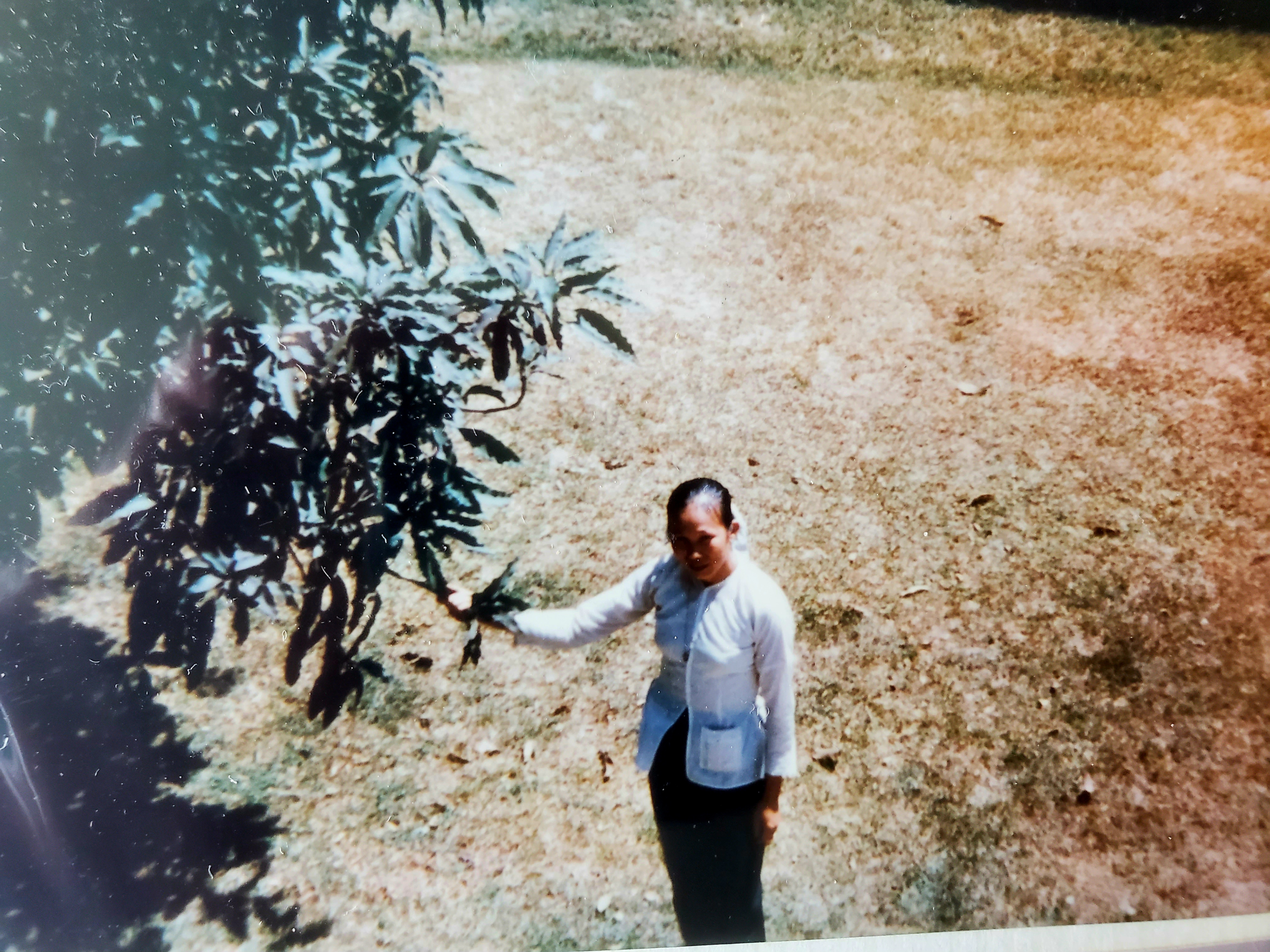
Binh at work
After finally entering the base, Binh walked to the barracks area where she would spend most of the day cleaning, sewing and chatting with the airmen who worked in various shifts on the base. Most of the men were kind to her and babysan. Babysan was Mai’s youngest daughter who accompanied Binh to work every day. The young girl helped sweep out the hooch, sort laundry and perform other tasks, assisting Binh.
Though most GIs were kind to Binh and babysan, some treated Vietnamese workers poorly, or targeted them for sexual favors. Binh kept a sharp eye out for anyone harassing babysan. Babysan was a GI favorite and many would protect her from inappropriate advances.
At the end of the workday, Binh and babysan got in line once more. All the Vietnamese workers were again searched prior to leaving the base. Pilferage was not considered a major problem, however some of the Vietnamese workers were Vietcong, or Vietcong sympathizers and they drew maps of the base facilities and recorded base activities for their VC units. Those individuals caught in such activities were immediately terminated. However, a worse fate awaited them, as they were turned over to ARVN authorities or the local militia. Often, they were never heard from again.
Life at Home
Once home, Binh performed devotions at her small Buddhist shrine. Mai would report any success she had in obtaining additional foodstuffs, or other needed goods through her contacts with the village elders and her scavenging efforts. The Vietnamese had to fight for survival every day, in one way or another.
As evening approached, Binh and Mai would go over the schoolwork that Mai’s daughter and Lan had received that day. After ensuring the girls remained diligent in their studies, a small meal was prepared. Binh and Mai checked the water buckets to make sure they didn’t have to go down to the river at night to fill them. Nighttime river trips brought danger, in the form of leopards, the occasional tiger, unseen snakes, and more often hostile VC.

Villagers were often caught up in the middle of the warfare.
VC activity had stepped up in recent days, resulting in tension and uncertainty in the village. Many villagers, though not VC, sympathized with the guerilla cause, creating conflict among neighbors and friends. Binh was smart enough to sidestep political discussion and involvement. Kind to all, but neutral, she sought to keep her small family away from being targeted by either side in the ongoing war. This was not an easy task, as members of both sides resided in the village.
As Darkness Fell, Fear Climbed

Cloaked in darkness, nighttime leveled the field somewhat for the VC, putting them on a more equal basis with their enemies. The U.S. countered with massive firepower.
When night fell, the tempo of war stepped up as the Air Base perimeter was frequently probed by local Vietcong. Protected by security forces and nervous augmentees, (Volunteers) outgoing gunfire often rang out throughout the night.

Joe’s friend Dave was a recurrent augmentee, assisting base security on the perimeter.
Sometimes large firefights would break out, and local villagers, innocent or not, would become collateral damage. Their small huts were unable to protect them from large caliber weaponry firing off in every direction. When Aircraft gunships got involved, the damage was often much worse. It wasn’t much of a life for citizens of the war-torn nation.
On a good night the villagers would tend to their rice crops and stores. They might net some fish before dark and with a little luck a puppet show or musical performance might provide a bit of entertainment to lift the spirits of the war weary people.
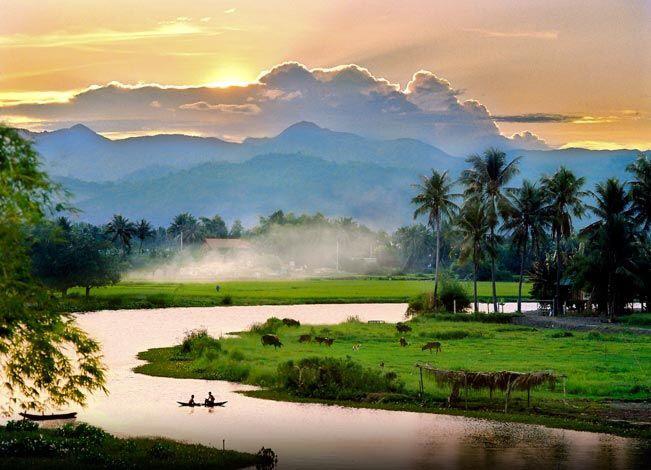
The period before dusk would sometimes bring moments of peace and serenity.
On such nights Binh’s village would snatch a small bit of happiness from a life normally devoid of it. After nightly devotions were held, Binh drifted off to sleep, pondering what might be in store for the morrow.
***
€ After leaving Vietnam, I had no further contact with Binh, and have no idea as to her and her families fate. However, knowing what followed I feared the worse. ∼ Joe

Joe, Thanks for sending this to me! I wish I’d read it yesterday. Great story! Brought back memories Some good some not so good!
Jim
Good to hear from you Jim. Glad you liked the story. 😃
Nice story Joe. I appreciated our hooch maids. It may be wishful thinking, but we can only hope that Binh, her family, and all other good people like them survived and are well.
Thanks Bob.